How to Organize Fishing Gear Storage for Groups
Last updated: November 2026
Quick answer: Group fishing gear stays organized when you start with one shared checklist, sort gear into personal, shared and trip zones, dry wet gear every night, and keep sharp, flammable and food items in separate labeled containers.
Why group fishing gear gets lost, damaged or duplicated
Five anglers, three coolers and a pile of rod tubes can turn an entryway into a mess by the second morning. The problem is rarely the gear. It's the lack of a plan. When nobody owns the system, reels get left on the deck, lures end up in the wrong bag, and two people buy the same net.
- Lost gear: Hooks, weights and pliers slip into the wrong bag.
- Damaged gear: Wet rods and reels left overnight start to rust.
- Duplicate gear: Nobody knows what the group already has, so everyone packs a spare.
A few simple habits fix most of this.
Step 1: Build a shared gear checklist
Start with one list everyone can see, in three tiers.
Tier 1, shared basics: first aid kit, cooler, fish cleaning supplies, spare pliers, line cutters and a shared tray of backup hooks and terminal tackle.
Tier 2, add-ons for the trip type:
- Boat days: a life jacket for every passenger, a throw cushion, anchor and line, a bait bucket and a dry bag for phones and keys.
- Bank and wade days: wading staffs, extra leaders, strike indicators and a small net for every two anglers.
- At the rental: drying racks, boot trays, headlamps and a bin for wet waders.
Tier 3, personal gear: rods, reels, waders, boots and personal tackle. Each angler labels their own, and none of it goes in the shared bin.
Keep the list in a shared spreadsheet or tape a printed copy inside the door. Check items off when you arrive and again when you leave.
Decide what the group buys and what each angler brings
Before anyone shops, split the list into two columns: group-owned and angler-owned.
- Group-owned: items everyone uses, like the shared tackle tray, a dry bag, the first aid kit and fish cleaning supplies. Buy them once and label them.
- Angler-owned: rods, reels, waders, boots and personal tackle. Fit and preference vary too much to pool these.
Step 2: Sort gear into zones
Zones make it obvious where each item belongs and who is responsible for it.
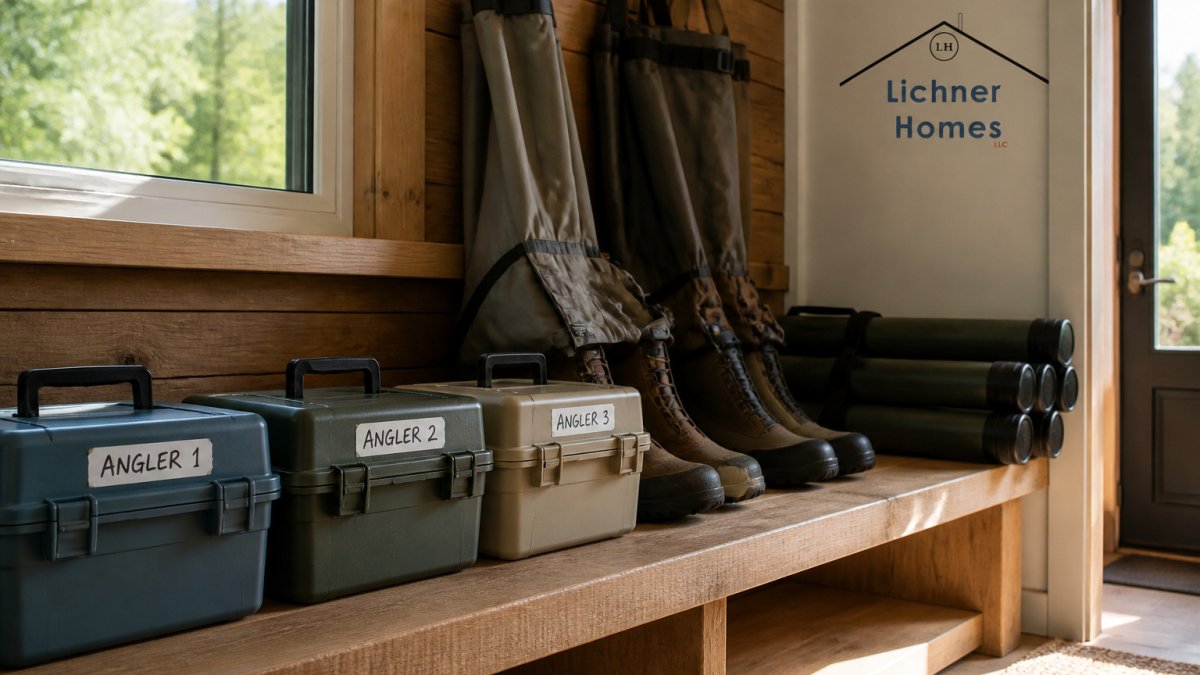
- Personal zone: one angler's rod, reel and waders.
- Shared zone: the cooler, first aid kit and cleaning supplies.
- Trip zone: items used only on the water, like life jackets and the bait bucket.
Label each container with the owner's name and zone, and give each zone one color so anyone can find the right bin at a glance.
Tackle ideas that work for a group
- One tackle box per angler for the hooks, sinkers and lures they plan to use.
- One shared tray for backup hooks, pliers, line cutters and spare swivels.
- Sort by type inside each box so nobody has to dig.
A simple rule: if more than one person uses it, it goes in the shared tray.
Step 3: Store rods safely
Rods are the most fragile gear in any group. Store them upright or in tubes, away from doors and walkways.
- Rod racks: a freestanding rack in the entry or carport.
- Rod tubes: for travel and for any rods left in a vehicle or trailer.
- Vertical holders: on a boat or in a truck bed, secured so they can't shift.
Count your rods before the trip. A rack that holds eight rods doesn't help if the group brings twelve. Once you're set, see our White River trout fishing guide for where to go.
Step 4: Dry wet gear every night
Wet gear causes the most damage on group trips. Water left on reels, line and waders leads to rust, mildew and smells by the end of the week. Each evening:
- Rinse rods and reels with fresh water and towel them dry.
- Hang waders and rain gear somewhere with airflow, not in a closed bag.
- Back off the drag on reels.
- Put lures and hooks back in dry, closed boxes.
A closed trunk or sealed tote traps moisture, so leave lids cracked until everything is dry.
Step 5: Label, track and separate hazardous items
A simple sign-out and restock system
- Number shared items, like "Shared Tray 1" or "First Aid 1," so a nightly count is quick.
- Post a sign-out sheet by the shared zone with item, angler, date out and date back.
- Count the shared zone each night and flag anything missing for the morning.
- Restock before you leave. Note what ran low and add it to the next trip's list.
Keep hazardous items apart
Sharp and flammable items need their own home, especially with kids along. Use three separate labeled containers: sharp, flammable, and food or bait.
| Item |
Where it goes |
Why |
| Hooks, knives, line cutters |
Closed, labeled box up high |
Keeps sharp items away from kids |
| Fuel for small motors |
Sealed, labeled can, outside living areas |
Keeps fuel away from food and bait |
| Batteries |
Their own sealed container |
Prevents contact with metal and leaks |
| Bait that can leak |
Closed bin away from food and dry gear |
Prevents spills and smells |
A home base built for gear
Good storage is easier with the right base. Lichner Resort Stays has a covered 4-car carport and boat and RV parking with power access, so wet gear and boats have somewhere to go. If you want a guided day, see our local fishing guides and marinas.
Frequently asked questions
How do you organize fishing gear for a group trip?
Start with a shared checklist, give each angler a labeled personal zone, and keep a shared zone for coolers, first aid and spare tackle. Count shared items before you leave.
What's the best way to store tackle for several anglers?
Give each angler a labeled box and keep one shared tray for extras. Clear containers make items easy to spot. Return borrowed items each evening.
Where should wet gear go after a day on the water?
Somewhere covered with airflow, like a carport or screened porch, not in closed boxes or bags. Rinse it, hang waders upside down and wipe reels dry.
How should a group label shared tackle?
Use waterproof labels or colored tape with the owner's name. Give shared items one color, keep a short list on the shared box, and have one person track what's checked out.
Stay with us
Make Lichner Resort Stays your basecamp. Our 3-bedroom, 2-bath home in Salesville sleeps 9 and sits about 2 miles from Norfork Lake and 3 miles from the White River. You'll have a screened deck, a fire pit, a covered 4-car carport and room to park your boat or RV. See the home or book direct for our best rate. Want to fish with a pro? Start with our local guides and marinas.